Every job below is one we do ourselves across Vancleave.
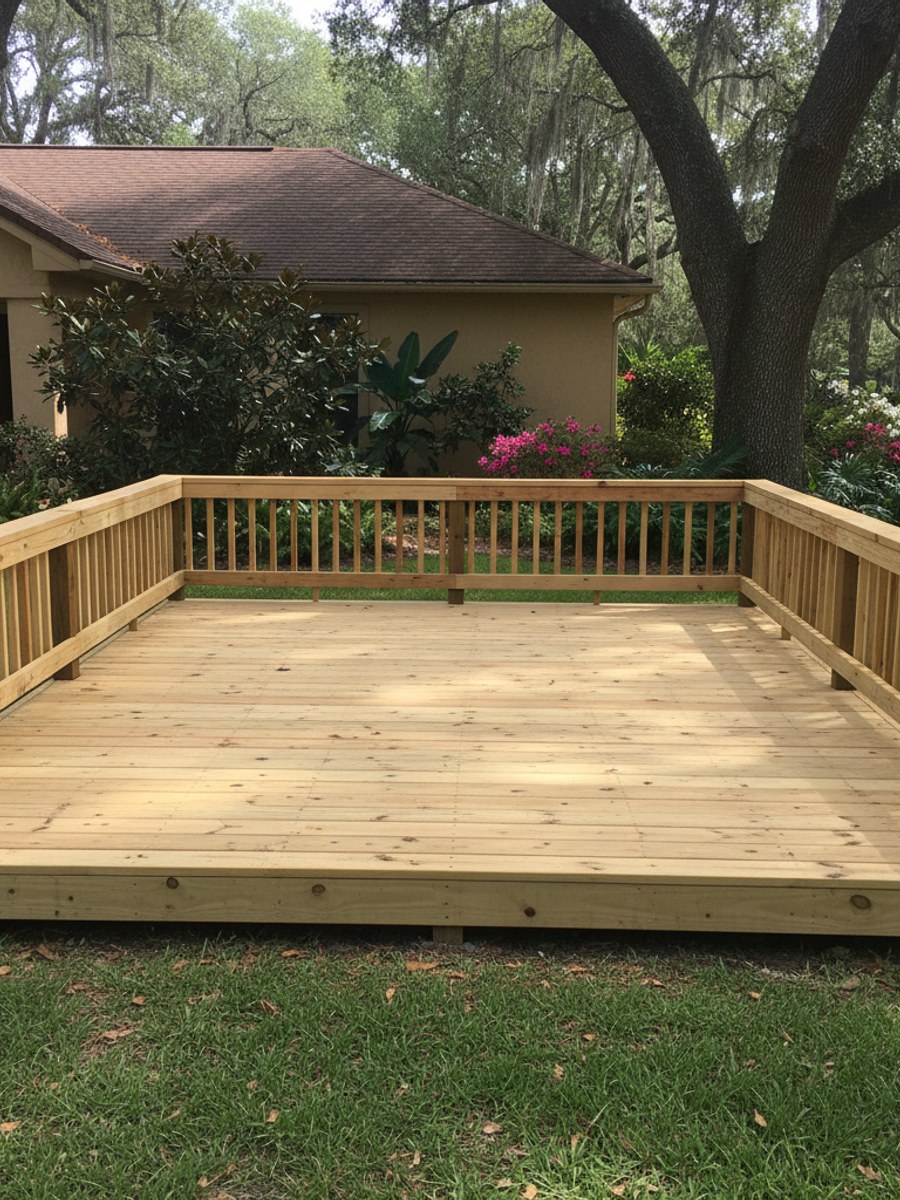
We pour concrete footings below grade for every post, not pier blocks sitting on top of the soil, so the frame doesn't shift when the ground gets saturated. Joists run 16 inches on center and we double them up under anything heavy, like a hot tub or a built-in bench. Ledger boards get flashed where they bolt to the house so rainwater doesn't track behind the siding and rot the rim joist.
Most repair calls start with a soft spot underfoot or a board that's cupped and split. We pull the bad boards, check the joist underneath for rot, and sister in new lumber if the joist itself has gone soft. A deck that's structurally sound but ugly on top is a different job than one where the ledger board has pulled away from the house, and we'll tell you which one you've got before we quote it.
Gulf Coast humidity and UV take the finish off a deck fast, usually inside two years on a south-facing board. We pressure wash at low pressure to strip mildew without tearing up the wood grain, let it dry a few days, then apply a penetrating stain and sealer rated for ground contact lumber. Composite decking doesn't need this, but the railings and stair stringers usually do.
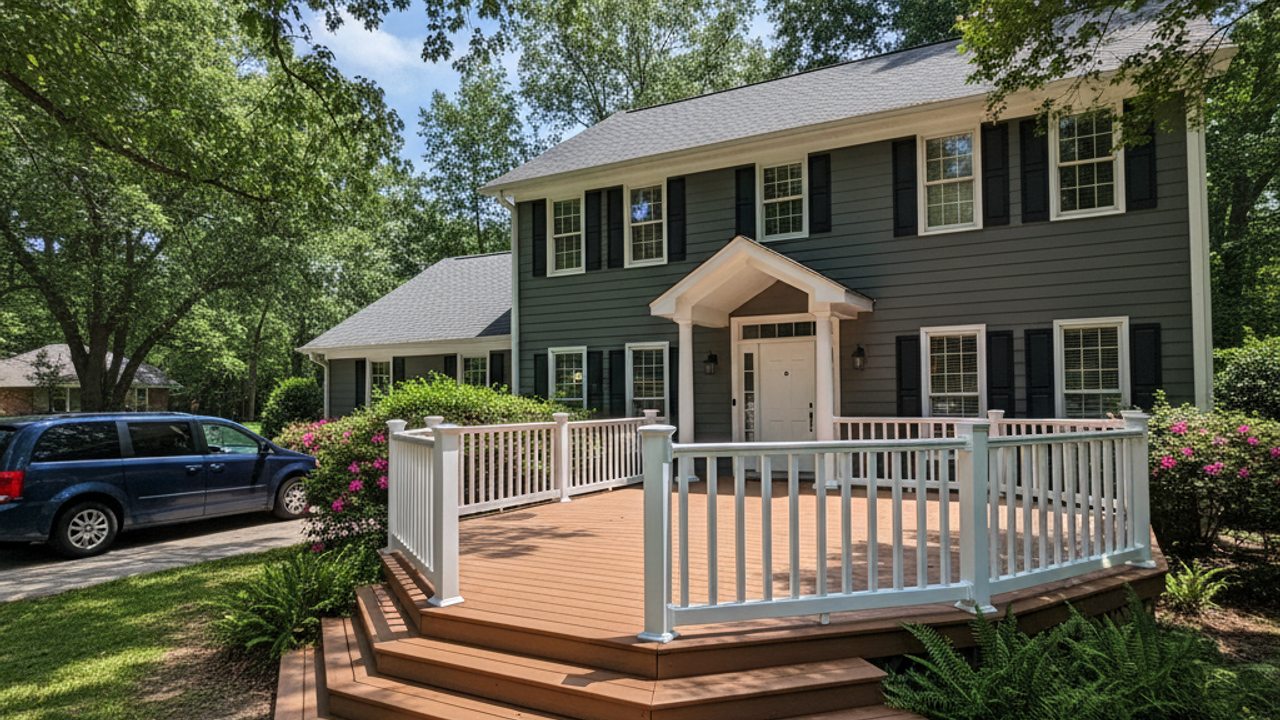
Some decks are a rectangle off the back door. Others wrap around a pool, step down in levels, or tie into a screened porch, and those need real drawings before anyone cuts a board. We'll sketch the layout, figure the footing locations, and walk you through board direction and railing style before we order material.
Composite boards like Trex or TimberTech don't rot, but they still need the framing underneath done right, hidden fasteners set at the correct gap for thermal expansion, and joists spaced tighter than you'd use for wood in some brands' specs. We follow the manufacturer's fastening pattern so the warranty stays intact, not just what looks fine on install day.
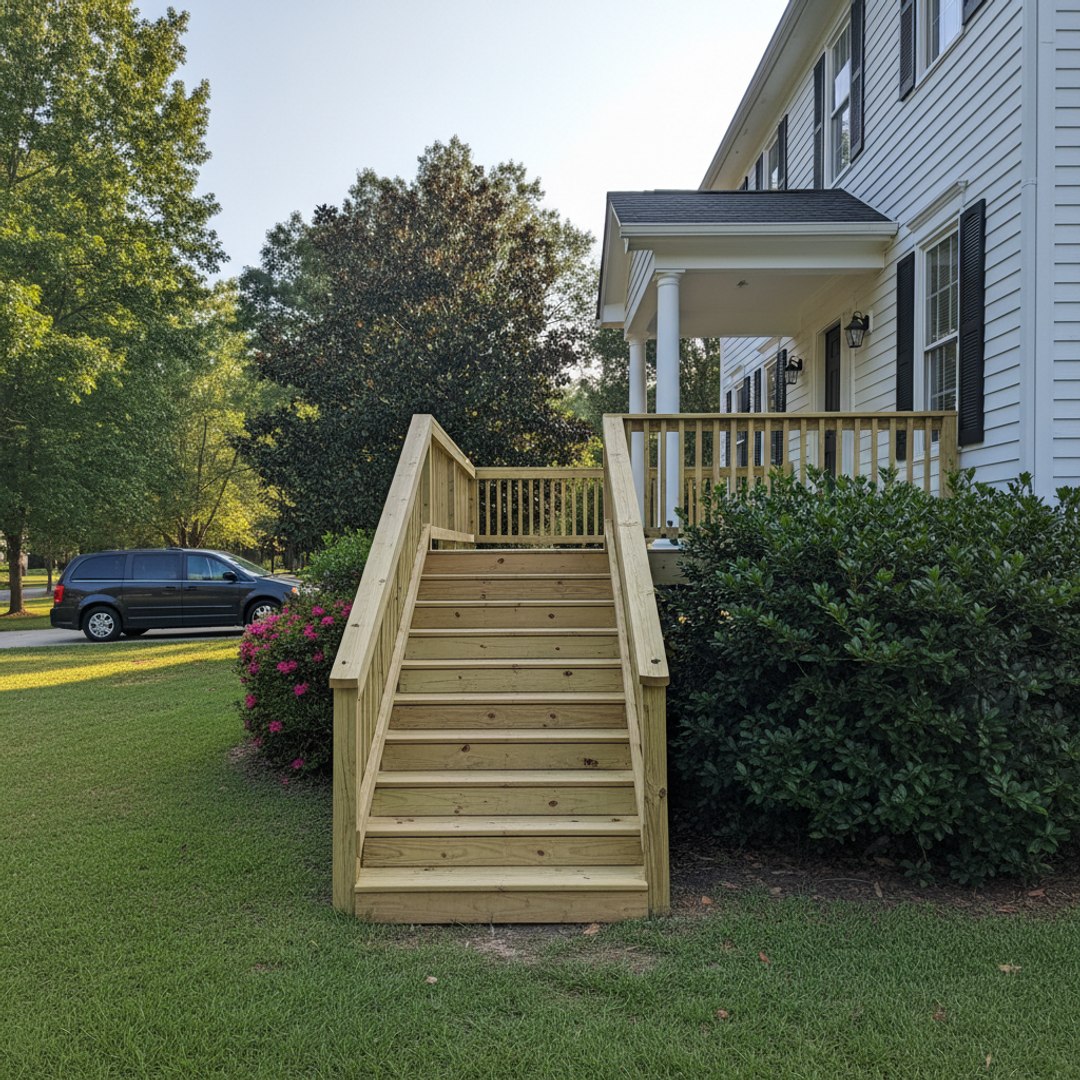
Code here calls for a 36 inch rail height on most residential decks and baluster spacing that won't pass a 4 inch sphere. We replace loose or rotted posts by bolting through the rim joist with structural screws, not toe-nailing, because a rail that racks side to side is a fall waiting to happen. We also handle cable rail and aluminum systems if you want to keep the view open.
If the frame underneath is still solid, you don't need a full teardown, just new decking boards and maybe new railings on top of the existing structure. We check joist spacing and condition first, because resurfacing a frame that's not up to it just hides a problem instead of fixing it. This is usually the cheaper route if the deck's less than 15 years old and the wood underneath hasn't rotted.
A lot of homeowners want part of the deck open and part screened in to get away from mosquitoes in the evening. We frame the screened section with its own roof structure tied into the house, and build the open deck portion off the same ledger so it reads as one continuous space, not two projects bolted together.
Old decks come down board by board when we can, so we're not swinging a sledgehammer near your siding or windows. We haul off the lumber and clean up the nails and screws left in the yard, then check the ledger area for rot before anything new goes up in its place.
A pergola or solid roof over part of the deck cuts the afternoon sun enough to actually use the space in July. We tie the posts into the deck framing with proper hardware, not just lag screws into the decking boards, so it holds up under wind load.
Four steps, and no surprises in any of them.
You tell us what you want doing, we look at what is actually there, and we ask the awkward questions early.
In writing, itemised, free. If something might add cost later we flag it now rather than at the end.
Same crew throughout. We cover your floors, keep the dust down and tidy up before we leave each day.
You point out anything you are not happy with and we fix it before the invoice, not after.
This is the area we drive to for deck estimates and installs.
Questions that come up once a deck project actually gets underway.
Describe the problem and we will tell you what it probably is. No obligation.