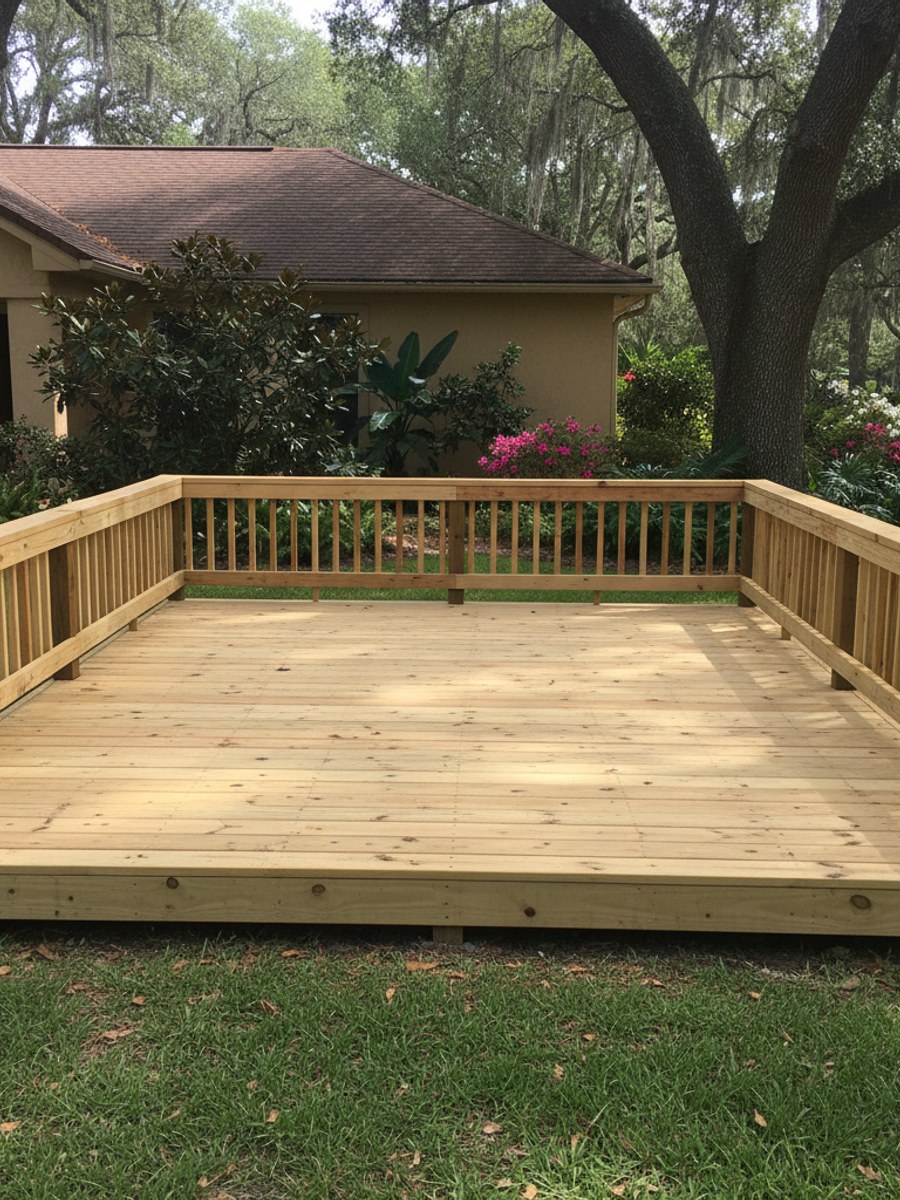
A deck is one of the few home projects where the failure mode is dramatic. A bad paint job peels. A bad deck can drop a family into the yard during a Fourth of July cookout. That's not scare talk, it's why the framing and the attachment to your house matter more than the railing style you picked out of a magazine.
Vancleave sits in Jackson County, and the ground here isn't the same problem you'd have in the hill country further north. We don't deal with a real frost line, so footings don't need to go down four feet to escape freeze-thaw heave the way they would up in Tennessee. But a lot of lots around here have sandy to sandy-loam soil that drains fast in some spots and sits soggy in others where clay pockets show up, especially closer to the creek bottoms and low areas off Highway 57. A footing that's poured on loose fill instead of undisturbed soil will settle, and a settled footing means a deck that racks and doors that stick after a couple years. Any builder should be digging to solid ground and typically going at least 12 inches deep on footings here, more if the soil's soft or the deck is tall.
Start with the paperwork, not the pictures
Ask to see a current Mississippi contractor's license and liability insurance before you talk about railing styles. For most residential decks in this area you'll also need a building permit, usually through the county if you're outside city limits, or through the town if your lot falls inside Vancleave's limits. The inspector is generally checking footing depth and placement, ledger attachment, joist spacing, and railing height and baluster spacing before it's covered up or once it's framed. If a builder tells you permits are a waste of time or that they'll "handle it" without ever pulling one, that's not a shortcut, that's them betting your safety inspection never happens. If your property has a septic drain field or you're near a flood zone off one of the bayous, that can affect where a deck can sit relative to setbacks, so a builder who asks about your lot lines and easements before quoting is doing it right.
The ledger board is where decks actually fail
Most deck collapses aren't about the boards you walk on, they're about the ledger, the board bolted to your house that the whole structure hangs off of. It needs proper flashing so water doesn't get behind it and rot your rim joist, and it needs to be through-bolted or lag-screwed into the framing of the house, not just nailed. Ask directly: how is the ledger attached, and how is it flashed? If the answer is vague, or if a contractor is planning to just nail it up, that's a deck that separates from the house in a few years, sometimes without warning. Fasteners matter too. Almost all treated lumber sold today is ACQ-treated, which corrodes plain steel fast in our humidity. Hardware needs to be hot-dip galvanized or stainless, and joist hangers should match the lumber, not be whatever was left over from a different job.
Material choices that actually hold up on the Gulf coast
Pressure-treated pine is still the most common decking and framing material around here, and it's a fine choice if it's installed with the right gaps for expansion and finished within a reasonable window. Composite decking costs more up front but skips the yearly staining, which matters in a climate where UV and humidity both work against a finish. If you go with wood, plan on staining or sealing it every 1 to 2 years, not every 5, because our summer sun and the humidity off the coast break down a clear coat faster than it would in a drier climate. A builder who pushes composite hard without asking what you actually want, or who pushes pine without mentioning the maintenance, isn't listening to you.
Screened porch and deck combos need extra attention to how the roof ties into the existing house and how water sheds off it, since a poorly flashed tie-in is a slow leak into your attic that you won't notice for a year. Pergolas and deck covers need to be rated for wind, since we're squarely in hurricane season territory from June through November, and a cover that isn't properly anchored with hurricane straps or bolted posts is the first thing to come apart in a tropical storm.
What the age of your neighborhood tells you
Older homes around Vancleave and the surrounding rural roads are often on pier and beam foundations, sometimes with additions and old decks already tacked on that were never permitted. A builder working on one of these needs to check what's actually holding up the existing structure before tying anything new into it, and sometimes the right answer is to tear the old deck off rather than build onto it. Newer subdivisions closer to Ocean Springs and Gautier are more likely to be slab homes with an HOA, which can mean rules about railing style, deck height, or even whether a screened addition is allowed. Ask early whether your neighborhood has an HOA, because a builder who's dealt with one before will know to get the design approved before pouring anything, not after.
Red flags worth walking away from
- A quote that's dramatically lower than everyone else's, especially if it comes with pressure to sign that day.
- No written contract, or a contract that doesn't specify lumber grade, footing depth, or fastener type.
- Reluctance to pull a permit, or a claim that your project is "too small" to need one.
- No mention of how the ledger will be flashed and attached.
- Asking for full payment up front before any material is delivered.
A good builder will walk your lot, talk about drainage and where water actually goes when it rains hard, and give you a written scope that names the lumber, the fasteners, and the footing spec, not just square footage and a price. That's the same standard we hold our own jobs to at Paradise Deck Solutions, whether it's a repair on an old deck that's been sitting since the 90s or a full custom build going in from scratch.